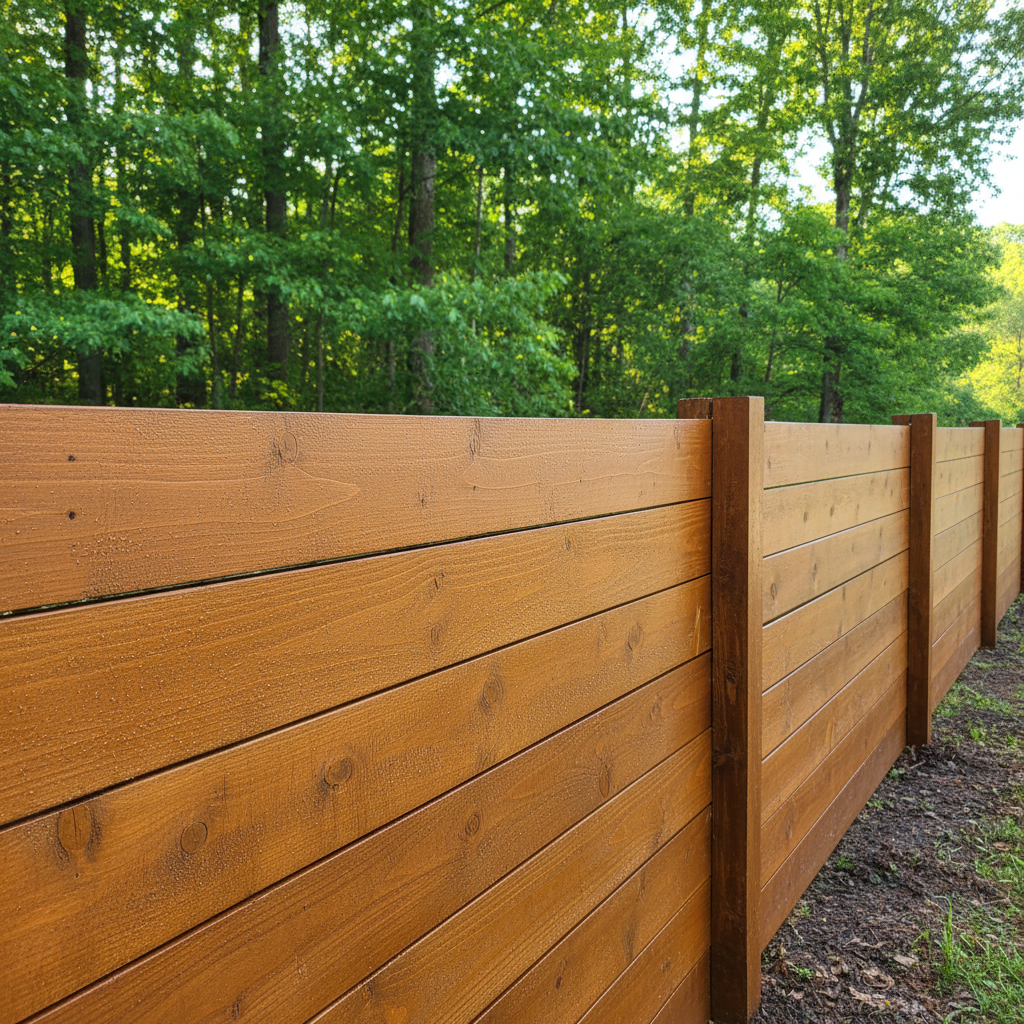
Homeowners near Tellico Village often notice their wood fence turning a dull, chalky gray over time. Down here in Loudon County, our heavy summer humidity combined with sudden spring thunderstorms takes a heavy toll on exterior wood. Left unprotected, a standard pine or cedar fence will start rotting much faster than expected.
Staining a fence is a solid weekend project if you have the time and patience. Before you run down to the hardware store for five gallons of stain, Loudon Fencing Solutions wants to break down what you actually need to know before, during, and after the job. Loudon Fencing Solutions receives calls all the time from homeowners who found out that DIY fence staining requires more time than expected.
Before You Start: Prep Work is 90 Percent of the Battle
Preparation work is sweaty and tedious. If you skip prep work, the new stain is going to peel off in less than a year. First off, check your wood moisture. If Loudon County just had a week of heavy rain, that fence is holding water. Wait until we get a few dry, sunny days so the wood can actually absorb the product.
Next, you have to clean it. You cannot just apply stain over pollen, dirt, and mildew. Rent a pressure washer if you need to, but keep the PSI low—around 500 to 800 for cedar or pine—or you will gouge the grain. Let the fence dry completely for at least 48 hours after washing. Grab a handful of old rags and clear away any spider webs or loose debris stuck between the boards.
During the Project: Rolling, Brushing, and Weather Watching
Pick your product carefully. Clear sealers look nice for about six months, but a semi-transparent stain gives you the best mix of UV protection and natural wood grain visibility. Avoid cheap paint unless you want a maintenance nightmare down the road. Paint forms a film that traps moisture, and once it cracks, you are looking at endless scraping.
When you start applying, keep an eye on the sky. A pop-up afternoon shower in East Tennessee can ruin your day in seconds. Work in sections, following the sun around your yard so you are not staining wood that is baking in direct, blistering afternoon heat. Use a pump sprayer to get coverage fast, but always follow right behind it with a brush or roller to work the stain deep into the boards.
After the Job: Maintenance and Reality Check
Once you are done, stay off the fence and let it cure. Keep dogs and kids away until it is dry to the touch. Plan on touching up high-moisture areas near the ground every couple of years.
Now for the reality check: when should you just hand this job over to a pro? If your fence is over six feet tall, spans a half-acre of steep slope, or hasn't been touched in a decade and needs heavy restoration, you might want to save your weekends. For homes and businesses in Loudon, Loudon Fencing Solutions provides Fence staining services.