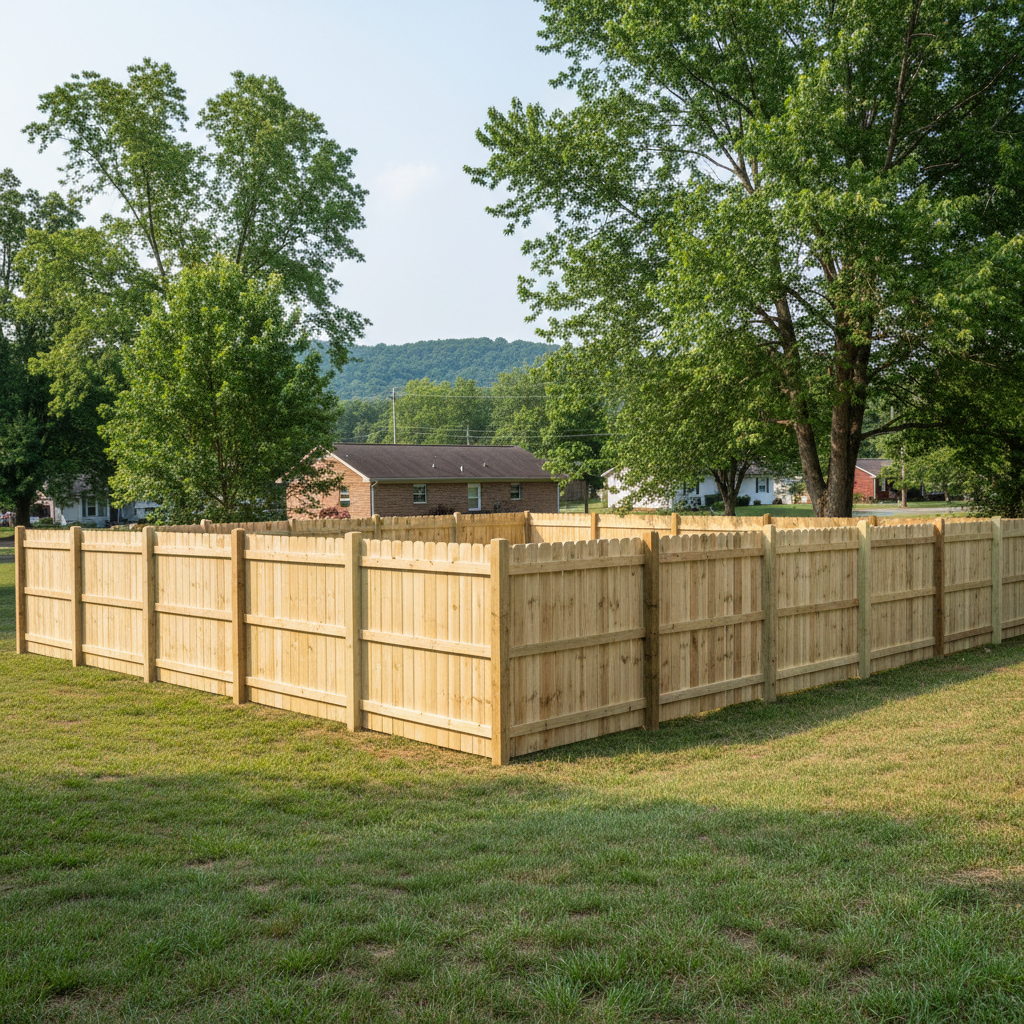
Alright, let's talk wood fences. You're probably wondering what it's gonna cost you to get a good, solid wood fence up around your property here in Loudon. It's a fair question, and honestly, it's one of the first things folks ask me when they call Loudon Fencing Solutions.
Now, I can't give you an exact number without seeing your yard, but I can sure as heck give you a realistic breakdown of what goes into the price and what you should expect to pay. No smoke and mirrors, just the facts.
What Makes a Wood Fence Cost What It Does?
There are a few big factors that swing the price tag up or down. Understanding these will help you figure out your budget.
- Type of Wood: This is probably the biggest one. Pressure-treated pine is your most common and most affordable option around here. It's durable, takes stain well, and holds up against our humid Loudon summers and wet winters. Cedar is a step up; it's naturally rot and insect resistant, looks beautiful, but it's going to cost you more – sometimes 20-40% more than pine. Then you've got specialty woods, but most folks stick with pine or cedar for good reason.
- Fence Style: A simple picket fence is cheaper than a full privacy fence. A shadow box or board-on-board style, which uses more material and takes more labor, will be more expensive. Dog-eared, flat-top, gothic-top – these all have slight variations in cost, but the main driver is how much wood is used and the complexity of the build.
- Height of the Fence: Makes sense, right? A 6-foot privacy fence uses more wood and takes more effort to install than a 4-foot picket fence. Most residential fences are 4, 5, or 6 feet tall.
- Length of the Fence: This is straightforward. More linear feet means more materials and more labor. We measure in linear feet, not square feet, for fences.
- Terrain and Soil Conditions: This is where local knowledge really counts. If your yard is flat and easy to dig, great. But if you've got a steep slope, or we hit a bunch of rock when we're digging post holes – which happens more often than you'd think in some of the older, rockier parts of Loudon, especially up in the hills – that adds time and effort, and sometimes special equipment. We've got pretty varied soil around here, from soft loam to hard clay and rock.
- Gates: Every gate adds to the cost. A standard 4-foot walk gate is one thing, but a double-drive gate, or a custom-built gate, will add more. Hardware for gates also varies in quality and price.
- Old Fence Removal: If we have to tear down and haul away an existing fence, that's an extra charge for labor and disposal.
Typical Cost Ranges for Wood Fences in Loudon
Okay, let's get down to some numbers. Remember, these are averages for a professionally installed fence, including materials and labor. These aren't DIY prices, and they don't include any fancy custom work or difficult terrain surcharges.
- Pressure-Treated Pine (6-foot privacy fence): You're generally looking at about $28 to $40 per linear foot. This is for a solid, standard dog-eared or flat-top privacy fence. So, for a typical 150-foot backyard fence, you might be in the $4,200 to $6,000 range.
- Cedar (6-foot privacy fence): For cedar, expect to pay more, usually in the range of $38 to $55 per linear foot. That same 150-foot fence could run you $5,700 to $8,250.
- 4-foot Picket or Semi-Privacy (Pine): If you don't need full privacy, a 4-foot pine fence might be closer to $22 to $35 per linear foot.
These numbers include posts set in concrete, pickets, rails, and all the labor to get it done right. Gates will add anywhere from $300-$600 for a standard walk gate, and more for double gates.
What Should Be Included in Your Quote?
When you get a quote from me or any reputable fence company, make sure it's clear. Here's what you should expect to see:
- Total Linear Footage: The exact length of the fence.
- Fence Style and Height: Clearly stated (e.g.,