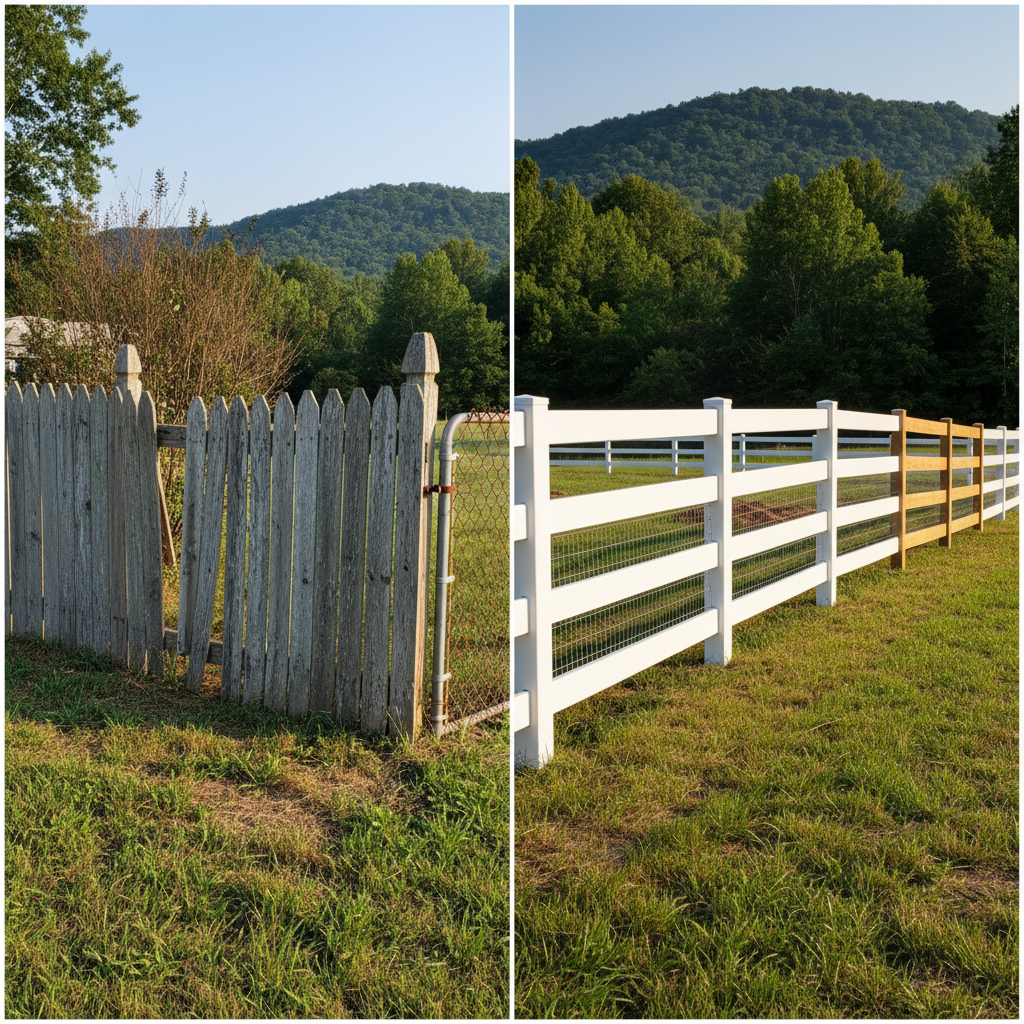
Alright, let's talk farm fencing. If you've got some acreage here in Loudon, maybe you're out towards Greenback or down by Tellico Village, you're probably thinking about keeping your animals in, or perhaps other animals out. There are a bunch of ways to do it, but two common ones folks ask me about for larger properties are woven wire and high-tensile smooth wire. Let's dig into what each one means for your place.
Woven Wire Fencing: The Classic Choice
When most people picture a farm fence, they're probably seeing woven wire. It's that classic mesh-style fence, often called 'field fence' or 'hog wire' depending on how close the wires are. You'll find vertical and horizontal wires woven together, which creates a pretty solid barrier, you know?
Cost
Upfront, woven wire can be a bit pricier per linear foot than high-tensile, especially if you go for the heavier gauge stuff. The labor to put it up can also add up; you're typically stretching a heavier, less flexible material. You'll need more posts too, usually spaced about 8 to 12 feet apart, just to keep it taut and stop it from sagging.
Durability & Security
This is where woven wire really shines for certain jobs. Because it's a physical barrier with smaller openings, it's excellent for keeping smaller animals contained – think goats, sheep, pigs, or even just keeping your dogs from wandering too far. It's also quite good at deterring predators like coyotes, especially if you get a taller fence. It's tough, and if one section gets damaged, it usually doesn't mess up the whole run.
Maintenance
Maintenance is generally low once it's installed. You'll want to check for fallen trees or branches that might dent it, and sometimes you'll have to re-stretch a section if it sags. Rust can become an issue over time, particularly in our humid Tennessee climate, but galvanized options help a lot with that. Weeds and brush can grow up through it, which is annoying to clear, but it won't short out an electric charge like it would with high-tensile.
Appearance
It's got that traditional farm look, doesn't it? It blends in well with the landscape, and it's not overly noticeable. For many, it just looks right on a rural property.
High-Tensile Smooth Wire: The Modern Workhorse
High-tensile smooth wire is a different animal entirely. It's usually a few strands of very strong, smooth wire, often electrified. This isn't your granddad's barbed wire; it's designed to be a psychological barrier more than a physical one.
Cost
This is usually where high-tensile wins on the initial cost. The wire itself is cheaper per foot, and you need fewer posts. We're talking 30 to 50 feet between posts, sometimes even more on straight runs, because the wire is so strong and holds tension so well. However, you do have the added cost of an energizer, ground rods, insulators, and cut-off switches if you're electrifying it, which most people do.
Durability & Security
High-tensile wire is incredibly strong. It can take a lot of impact from animals without breaking. The key to its security is the electric shock. Animals learn quickly to respect it. It's fantastic for cattle, horses, and even deer. It's not great for smaller animals like chickens or very young goats that can slip through the strands, and it's not a physical barrier against determined predators unless you've got enough strands and a powerful energizer. Animals also tend to get less injured if they run into a smooth electric wire compared to woven wire or barbed wire.
Maintenance
This is where things can get a bit more involved. You've got to keep the fence hot, so you need to check your energizer regularly. Vegetation growing up and touching the wires will ground out the fence, reducing or eliminating the shock, so you'll need to keep a clear fence line. That means more weed-eating or herbicide application. You'll also need to check for broken insulators or wires. The good news is, if a wire breaks, it's usually easy to splice back together.
Appearance
It's much less visible than woven wire. From a distance, it almost disappears, which some folks prefer. It's a clean, modern look for a farm fence.
Which One Should You Choose for Your Loudon Property?
Alright, so you've got the rundown. Here's my take, based on what I've seen working on properties all over Loudon County, from the more open fields out past Highway 72 to the wooded lots closer to the lake.
If you're trying to contain smaller livestock like sheep, goats, or pigs, or if you're really worried about small predators getting in, woven wire is probably your best bet. It's a physical barrier that's harder for them to get through. It's also a good choice if you don't want the hassle of maintaining an electric fence, or if you're in an area where power access is tricky.
However, if you're primarily dealing with larger animals like cattle or horses, or if you're looking for a cost-effective way to fence a large area and you don't mind the extra maintenance of keeping the line clear, high-tensile smooth wire, especially electrified, is a fantastic option. It's incredibly durable, and once animals learn to respect it, it's very effective. The ground around here, especially in some of the clay-heavy areas, can be tricky for getting good ground rod connections, but it's nothing a good installation can't handle.
For some properties, a combination of both might be the ultimate solution. Maybe woven wire around the barn or smaller paddocks, and high-tensile for the larger pasture areas. It really comes down to your specific needs, the type of animals you have, and your budget.
Whatever you decide, make sure it's installed right. A poorly installed fence, no matter the type, is just a waste of money. If you're looking to get a solid fence up on your property, give us a call at Loudon Fencing Solutions. We've put up plenty of both types around here, and we can help you figure out the best approach for your place.